Lincoln City did not declare itself the Kite Capital of the World as a promotional stunt. The geography backed it up first. The town sits on a seven-mile stretch of open Pacific beach with consistently strong onshore winds, a wide flat strand that gives kite lines room to run, and a sky unobstructed by coastal headlands or tall dunes. If you wanted to design a natural kite-flying venue from scratch, you would build something close to what Lincoln City already has. The identity followed the conditions.
The result is a town that holds not one but two dedicated kite festivals every year — one in June and one in October — and maintains a year-round culture of kite flying that is visible on almost any weekend the wind cooperates. For anyone considering property in Lincoln City, that culture is worth understanding in both its festival form and its everyday form.
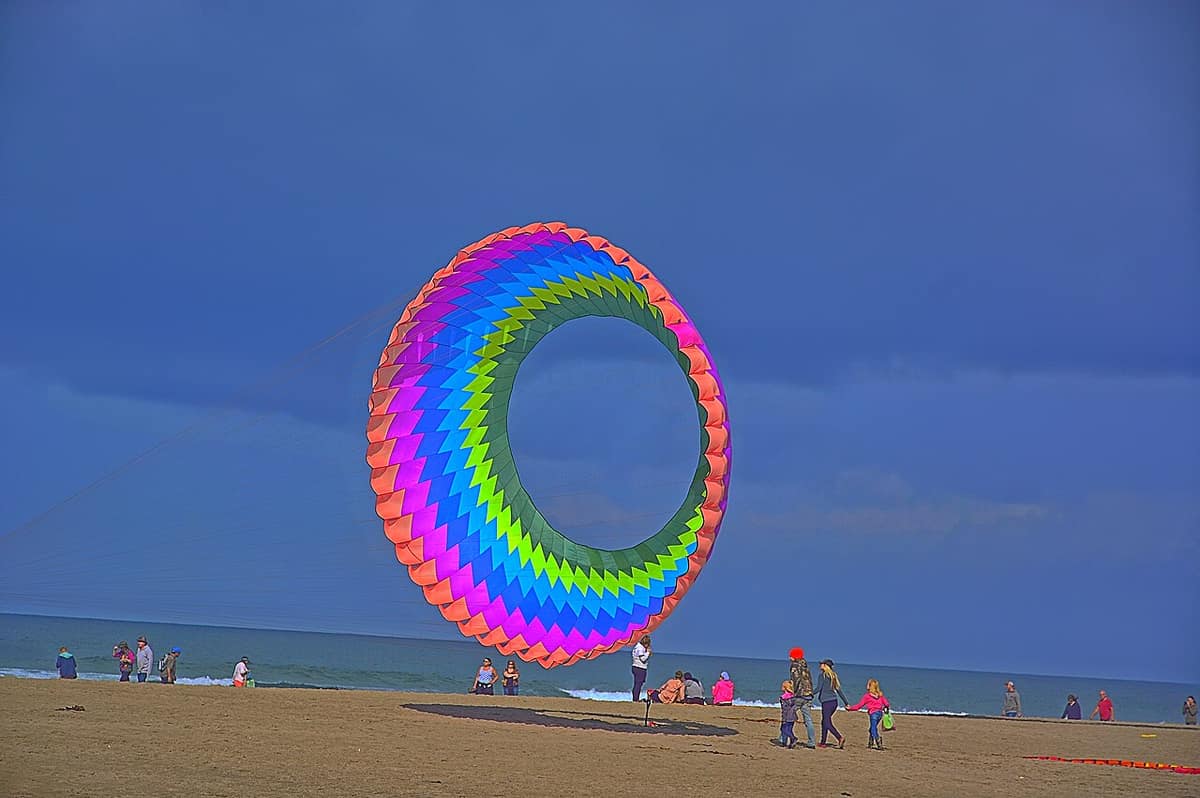
A spinning ring kite over the beach at D River Wayside during the Lincoln City Summer Kite Festival — Photo: Kirt Edblom from Kihei, Hi, United States / Wikimedia Commons (CC BY-SA 2.0)
Why Lincoln City Is the Kite Capital
The physics of Lincoln City's wind situation is straightforward: the town receives consistent onshore winds driven by the pressure differential between the cool Pacific surface and the warmer inland valleys. Unlike some Oregon Coast locations where wind is seasonal or variable, Lincoln City's exposure along a broad, uninterrupted stretch of beach produces reliable flying conditions through most of the year. Spring and fall tend to bring the strongest winds — which is exactly when both kite festivals fall.
D River Wayside, situated near the center of Lincoln City where the D River crosses the beach on its way to the ocean, has become the unofficial headquarters of kite flying in town. The D River holds a historic — if long-disputed — claim as the world's shortest river, measuring somewhere between 120 and 440 feet depending on the tide and how you measure it. It is a curiosity that Lincoln City wears with good humor. What is not disputed is the quality of the kite-flying conditions at the wayside. The open beach here, with easy parking access and a clear flight corridor, makes it the default launch point for festival events and casual flying alike.
The Summer Kite Festival (June)
The Summer Kite Festival in June is the larger and better-attended of the two annual events. It draws professional kite fliers from across the Pacific Northwest and beyond, along with kite vendors, equipment demonstrations, and the general energy of a beach town in high season. The festival typically runs across a weekend, with the action centered on D River Wayside and the adjacent beach.
What professional kite flying looks like is worth describing for anyone who has not seen it. The display kites used by serious competitors are nothing like the diamond kites most people associate with childhood beach trips. These are large, technically engineered flight instruments — some spanning 20 feet or more across — that move with precision through complex choreographed routines. Watching a skilled flier work a dual-line stunt kite through a low-level grid pattern while a 30-foot octopus kite hangs overhead is genuinely impressive, and it draws spectators who have no personal interest in kite flying at all. The festival is as much a spectator event as a participant one.
For families, the summer festival includes instruction for beginners, kite-making workshops specifically designed for children, and enough activity to fill a full weekend without ever leaving the beach corridor. The combination of professional demonstrations and accessible beginner programming gives the festival a range that makes it work for a wide audience. Vendors are typically on hand with equipment for those who want to take something home.
The Fall Kite Festival (October)
The Fall Kite Festival in October is smaller in attendance than the summer event, but it carries an argument for being the better experience. October is when Lincoln City's weather shifts toward something more dramatic — lower light, faster-moving clouds, waves that have picked up their off-season intensity. Flying a kite or watching someone else fly one under an October sky on the Oregon Coast is a different sensory experience than doing the same thing in June.
The fall festival also benefits from a natural convergence with the Finders Keepers glass float program, which opens for its season in October. A fall weekend in Lincoln City during festival time can include kite flying, glass float hunting, and dinner at Dory Cove or Pier 101, all without leaving the seven-mile corridor. The stacking of those experiences is not accidental — Lincoln City has understood for years that its off-season programming depends on layering activities that each individually might not justify a trip, but together create a compelling weekend destination.
From a vacation rental perspective, the fall festival weekend is notable for being meaningfully less competitive for booking than the summer festival weekend. Guests who discover the fall festival tend to return for it year after year, but the overall attendance is lower, which means availability is better for guests planning ahead.
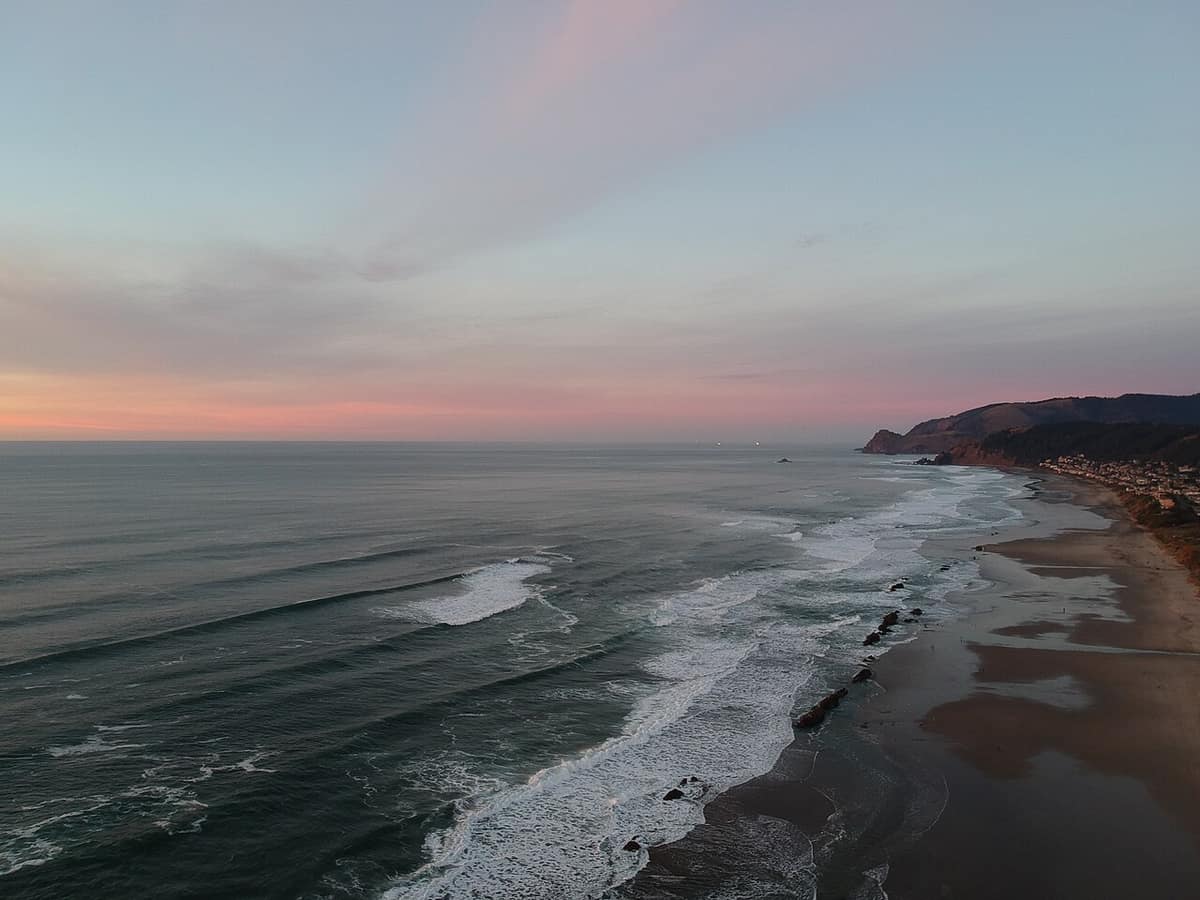
Lincoln City's long, open beachfront at dusk — the onshore winds that make it the "Kite Capital of the World" blow year-round — Photo: Lonelystudentwithtoomuchtime / Wikimedia Commons (CC BY-SA 4.0)
The Year-Round Kite Culture
Beyond the festivals, Lincoln City has a genuine everyday kite culture that is part of what makes the town feel distinct from other Oregon Coast destinations. On most weekends when the wind is cooperative — which is most weekends — there are people flying kites on the beach between D River and Roads End. It is an activity that requires nothing beyond the kite itself, asks nothing of your fitness level, and works across a span of ages from toddler to elderly. It is also an activity that is simply pleasant to be around even if you are not doing it yourself.
Kite shops are a fixture of Lincoln City's Highway 101 corridor. The town has supported kite retail for decades in a way that most beach towns cannot sustain, which is itself an indicator of the depth of the local culture. These are not impulse-purchase tourist shops — they carry serious equipment and employ staff who fly. They also give visitors a genuinely local starting point for getting into the activity.
What This Means for Property Owners
The practical implications for vacation rental owners are straightforward: both kite festivals drive bookings during shoulder-season weekends that would otherwise be harder to fill. The summer festival falls in peak season, when demand is already strong, but it tends to push booking timelines forward — guests who want festival weekend availability book early, which helps owners plan ahead. The fall festival provides a genuine off-season demand spike that properties without event programming cannot reliably replicate.
For buyers considering Lincoln City as a personal retreat rather than a rental, the kite culture represents something different: a low-barrier activity that ages well and works regardless of weather. A November morning spent flying a kite on a nearly empty beach is exactly the kind of experience that makes people stop asking "what do we do here in the off-season" and start asking when they can come back.
The Takeaway: Every coastal market has a summer story. The better investment question is what the fall and winter story looks like. Lincoln City has one of the most complete off-season programming pictures on the Oregon Coast — two kite festivals, the glass float hunt, casino entertainment year-round, and a beach culture that functions in rain as well as sun. That programming depth is part of the investment case, not just the lifestyle case.
Thinking about buying in Lincoln City? Coastal homes come with their own financing questions — second home or rental, flood insurance, condo eligibility. Phuong Ha, a licensed Oregon loan officer (NMLS #1839449), can help you sort them out before you make an offer.
Related reading